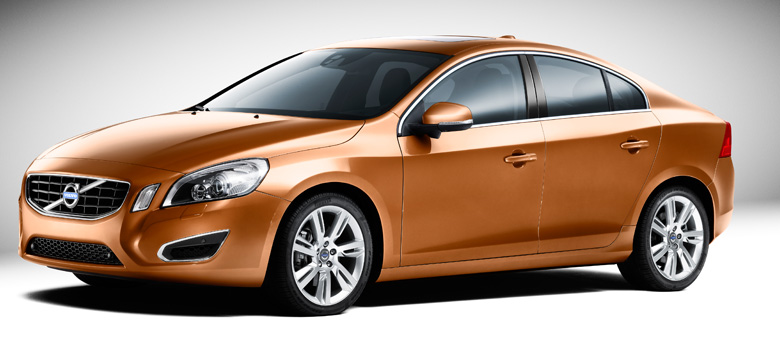
2010 Volvo XC70
 2010 Volvo XC70 - Its rugged performance simply gets you from point A, across any and all terrain, to point B. And make no mistake, this premier crossover vehicle, packed with performance features, understands that point B could be the top of a mountain or the top restaurant in town.


In-Car Child Safety
VOLVO GUIDE TO IN-CAR CHILDCARE
Most parents do everything they can to keep their children safe from harm but there can be danger even when traveling in the family car, caused by a lack of awareness about in-car child safety.
Supported by the company's comprehensive safety studies, Volvo has produced a handy guide to keep children safe while on the road. 'Children In Cars' is full of helpful tips and advice for anyone who travels with children1.
SIT UP, BELT UP
Six out of ten parents don't buckle their children in properly. They are unaware of how to fit the diagonal section of a seatbelt correctly (not too far out on the shoulder and never under the arm) and not sure how to fit a lap belt (across the tops of the legs, never across a child's stomach).
Using a standard seat belt provides 60% better protection than no restraint at all but using a forward facing child seat or booster cushion provides 80% better protection whilst a rearward facing child seat is 90% better.
FACE THE BACK FACTS
Quite simply, sitting facing the rear is the safest way to travel for any of us, but especially for children. Babies and children are fragile passengers as their heads are big and heavy in relation to the rest of the body (25% of total weight), and have thinner skulls, underdeveloped necks, pelvis and vertebrae compared to adults.
In the event of an impact using a rearward facing child seat, the whole of the child's back takes the impact, rather than its much more vulnerable neck. There is a five times greater risk of fatality or serious injury for children in forward-facing seats.
Babies and toddlers should be rearward facing up until at least the age of three and preferably longer. Currently, only 1 in 4 three year olds use rearward facing seats. Rearward facing seats should be only be used in the front passenger seat if the car has no, or a disabled, passenger airbag.
GETTING BETTER
The good news is that from 1976 to 2000, there has been a marked improvement in child car safety. In Sweden, the use of seat belts and car seats, particularly rearward facing child seats has risen from 25% to almost 100%. As a result, occurrences of injuries of Maximal Abbreviated Injury Scale scoring 2 or above (on a scale of 1 to 6, where 6 is most severe) are now a fifth of what they were 20 years ago.
Volvo Cars of Canada Corp. encourages all customers to make themselves aware of the regulations and recommendations stipulated by Transport Canada regarding young passengers.
1All statistics and information taken from 'Children in Cars, A Safety Guide', written and published by Volvo Car Corporation and based on comprehensive, ongoing research by Volvo's Traffic Accident Research Team and a variety of Swedish academic and governmental studies.


Preventative Safety
Simply put, avoiding accidents is better than having accidents. Much better. Preventative safety features like Dynamic Stability and Traction Control (DSTC) help you, the driver, avoid accidents by evading them. And nothing is safer for you than no accident at all. So every Volvo is equipped with a variety of innovative preventative safety features, many of which are, of course, uniquely Volvo, developed by Volvo safety engineers over years of research, design and testing, both in the laboratory and the real world.
Increased Visibility
One of the best ways to avoid accidents is for drivers to see and be seen clearly. That's why, when Volvo engineers and designer design Volvo's, they insist on large windows that help to reduce blind spots, automatic windshield wipers with intermittent speeds, electric rear window defrosters, innovative headlamps that produce more natural light, daytime running lights, side marker lights, and high-level brake lights. It's all an integral part of Volvo design. And that's a design that's easily recognized on roads all over the world.
Improved Handling
To ensure Volvo drivers maintain control of their vehicles at all times, we've developed smart systems that improve handling in demanding conditions. All Volvos are equipped with antilock brakes, but some models are also available with stability and traction control systems. These help prevent wheels from slipping and help drivers maintain control during unpredictable skids and roadway surprises.
Ergonomic Interiors
A driver must remain alert and focused at all times. Our preventative safety philosophy includes accessible controls, ergonomic seats, and advanced climate control systems that help you maintain a comfortable and refreshing environment, free from distractions.
This also means you keep your eyes on the road and hands on the wheel, right where you need them to be at all times.
Volvo Innovations in Preventative Safety
- Dynamic Stability and Traction Control (DSTC) - gathers and performs analysis of driving data in real time and stabilizes the vehicle by braking or limiting engine power.
- Antilock Braking System (ABS) with Electronic Braking force Distribution (EBD) - automatically pumps and releases brakes to help maintain control during hard braking.
- Roll Stability Control - helps prevent rollovers during extreme maneuvers.

Volvo Safety Centre
The Volvo Safety Centre is uniquely Volvo, the only one of its kind within the car industry. It helps us stay at the forefront in the one race that really matters: the race to save lives by building safer cars. Highly advanced laboratory equipment, like our pivoting crash track, enable safety engineers to create and analyze front impacts, rear impacts, and rollovers. That's nearly every conceivable accident scenario along with every angle in-between. Since 1970, the Volvo Accident Investigation Team has traveled around the world to investigate over 28,000 accidents. We don't take our reputation for safety lightly and neither should you.

Safety Firsts
In 1927, when Volvo founders Assar Gabrielsson and Gustaf Larson drew plans for their first motorcar, they believed that good design must include the utmost consideration for safety. Their commitment to safety has endured, and has been embraced and expanded today in Gothenburg, Sweden, headquarters of Volvo Cars. Through the years, Volvo has designed safety features based on extensive research of real-world accidents.
In 1970, we formed the Volvo Accident Investigation Team to study accidents involving Volvos. Since then the team has researched more than 20,000 individual accidents, resulting in significant improvements in automobile safety design, many of which have since been adopted by other carmakers. We are proud of this tradition, and hope that our innovations continue to inspire higher standards of safety throughout the automobile industry.
Volvo Safety Milestones
- 1944 Safety cage
- 1944 Laminated windshield
- 1959 Three-point seat belts in the front
- 1960 Padded dashboard
- 1964 Prototype of the first rear-facing child seat
- 1966 Energy-absorbent crumple zones at both front and rear
- 1967 Seat belts in the rear
- 1968 Head restraints in the front
- 1969 Three-point, inertia-reel seat belts in the front
- 1970 Establishment of the Volvo Accident Research Team
- 1972 Three-point seat belts in the rear
- 1972 Rear-facing child seat and childproof locks in the rear
- 1973 Collapsible steering column
- 1974 Energy-absorbent bumpers
- 1974 Fuel tank located ahead of rear axle
- 1978 Child booster seat
- 1982 Anti-submarining protection in the front and rear seats
- 1982 Wide-angle door mirrors
- 1984 ABS (Anti-lock Braking System)
- 1986 High-level brake light
- 1986 Three-point seat belt in the center rear seat
- 1987 Driver airbag
- 1990 Integrated child booster seat
- 1991 SIPS (Side-Impact Protection System)
- 1991 Automatic height adjustment of the front seat belts
- 1993 Three-point, inertia-reel seat belts standard in all seats
- 1994 SIPS bags (side-impact airbags)
- 1997 ROPS (Rollover Protection System) (convertible models)
- 1998 WHIPS (Whiplash Protection System)
- 1998 IC (Inflatable Curtain)
- 2000 Inauguration of Volvo Cars Safety Center in Gothenburg
- 2000 ISOFIX attachment system for all child seats
- 2000 Dual-stage inflation airbags
- 2001 Volvo Safety Concept Car (SCC)
- 2002 Extended rollover protection system (ROPS)
- 2002 Development of the virtual pregnant crash test dummy
- 2002 RSC (Roll Stability Control)
- 2003 IDIS (Intelligent Driver Information System)
- 2003 Rear seat belt reminders (in S40 and V50)
- 2003 New, patented, front-end structure reduces collision forces
- 2003 Inauguration of Volvo's Traffic Accident Research Team in Bangkok
- 2004 WRG (Water Repellent Glass)
- 2005 Introduction of DMIC (Door Mounted Inflatable Curtain) on the All-New Volvo C70


 Marginal
 Poor